
About the artist
The art of unlearning.
I make large, textured works in natural fiber. Double-sided paintings that behave like sculpture, made to hang free, to flip, or to divide the room they live in.
About Polen
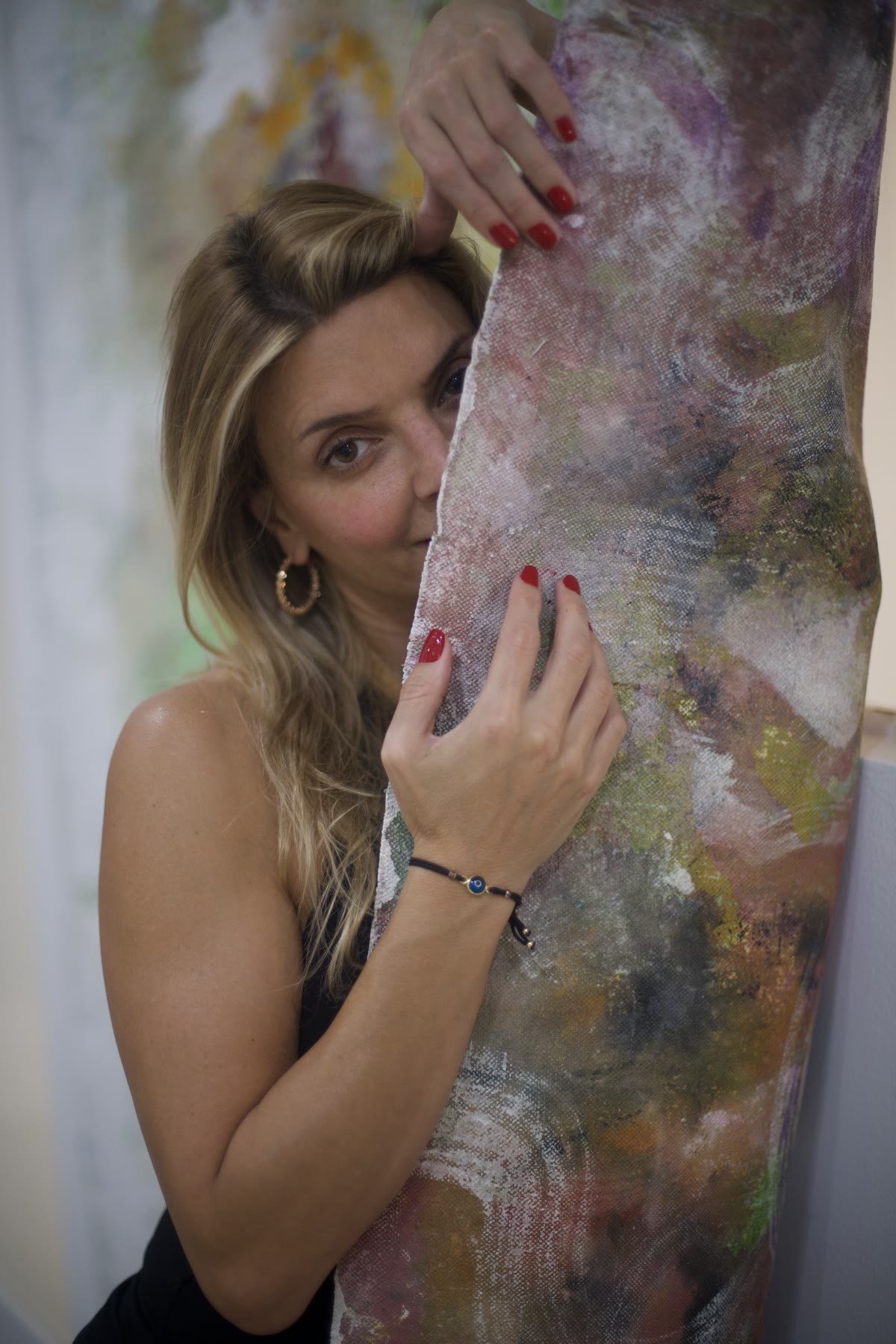
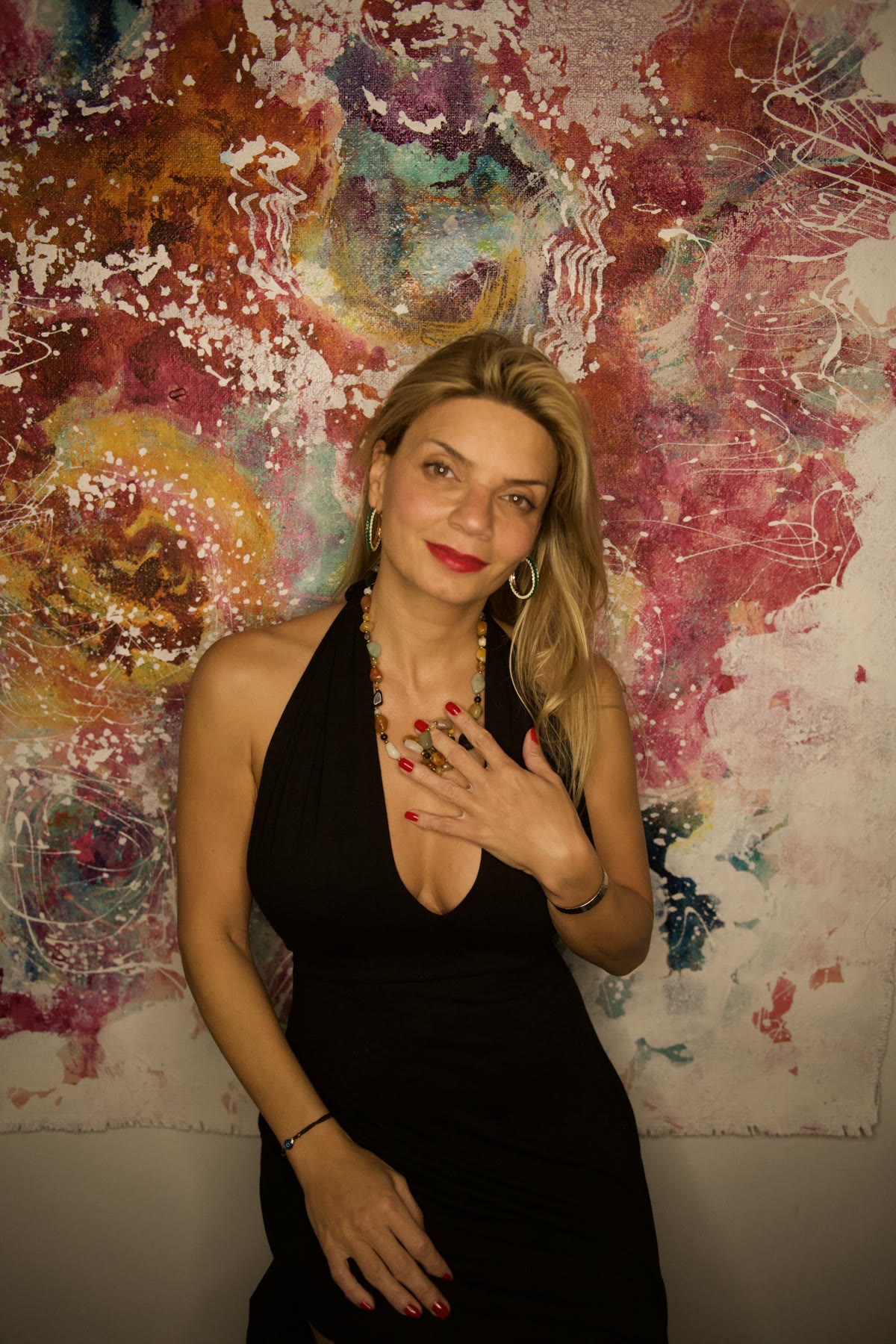
Polen Cerci is an artist and an architect. She spent years on large-scale architectural projects, and her work lives where the two meet.
Her art draws on two early sources: the creative years of architecture school, and the childhood art lessons where she found sculpture, concept and a childlike curiosity she has never lost. She was always an explorer, raised close to nature and above all to water.
Polen is an open water swimmer, and when she gets into the Atlantic she swims a few miles with her friends. She lived and studied in Australia, in the rainforest mountains and in Melbourne, by the ocean again.
Her early works were stolen, and Miami became her tabula rasa. She has lived and worked here for the last ten years. She is an alumna of Fountainhead Arts, exhibits during Art Basel and has been published in magazines. One of her paintings, Scarlette Red, was installed overnight in a Coconut Grove home for a French television feature.
The work
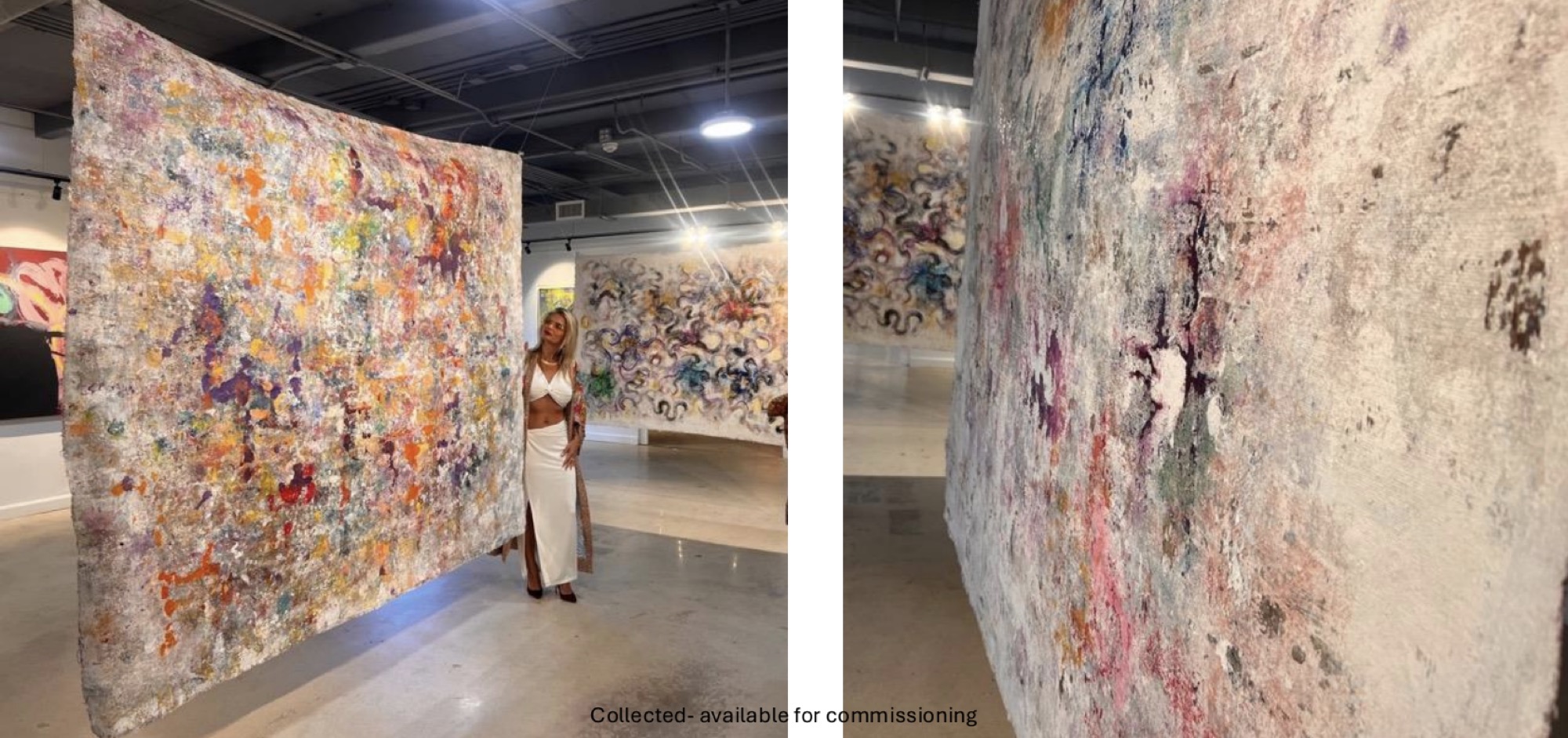
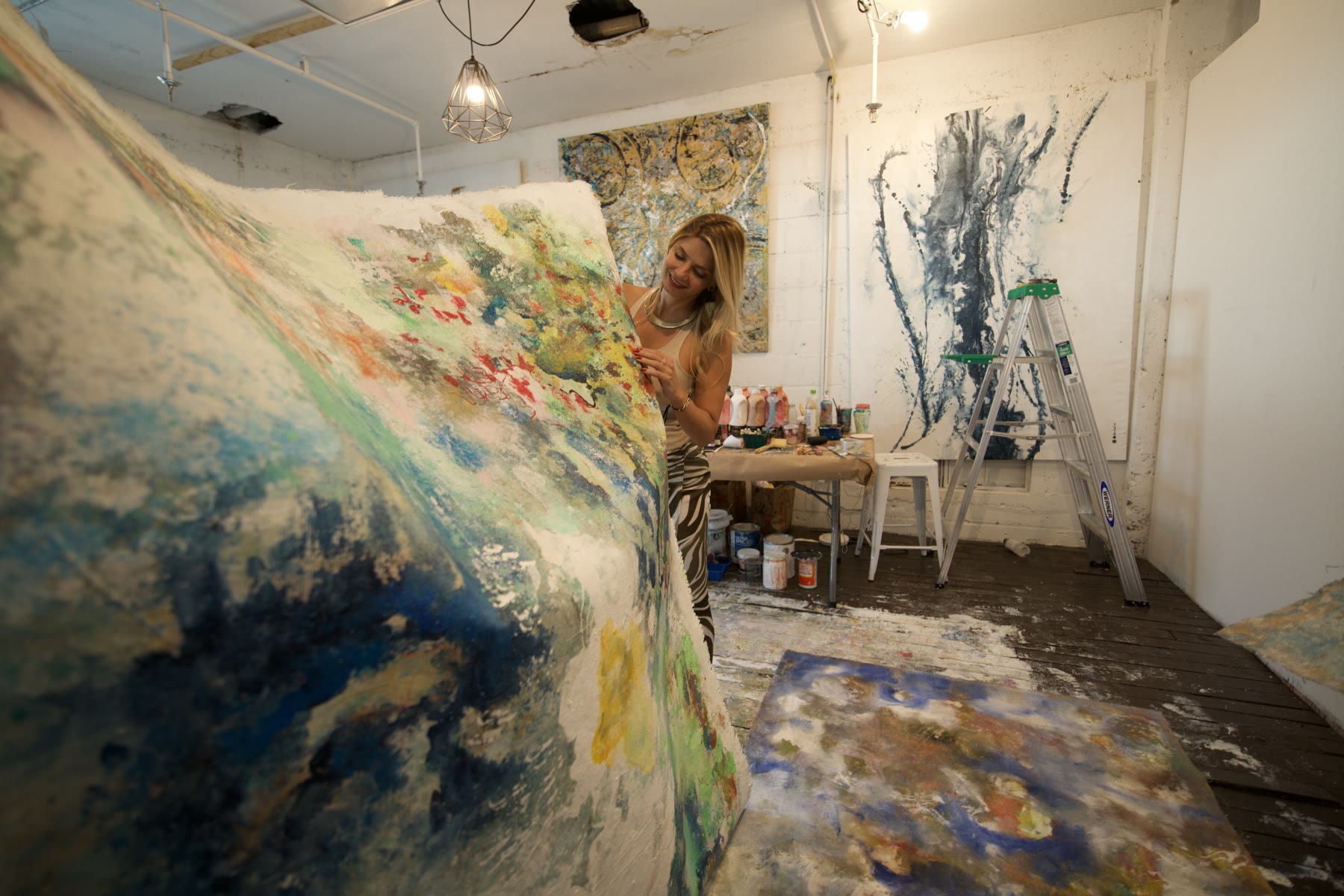
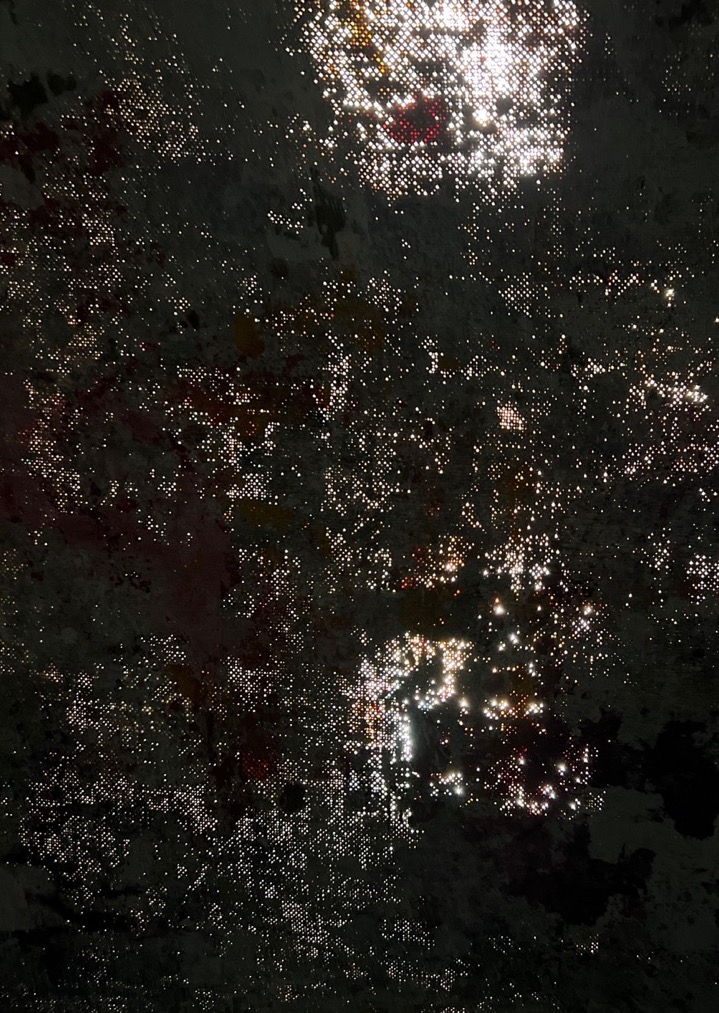
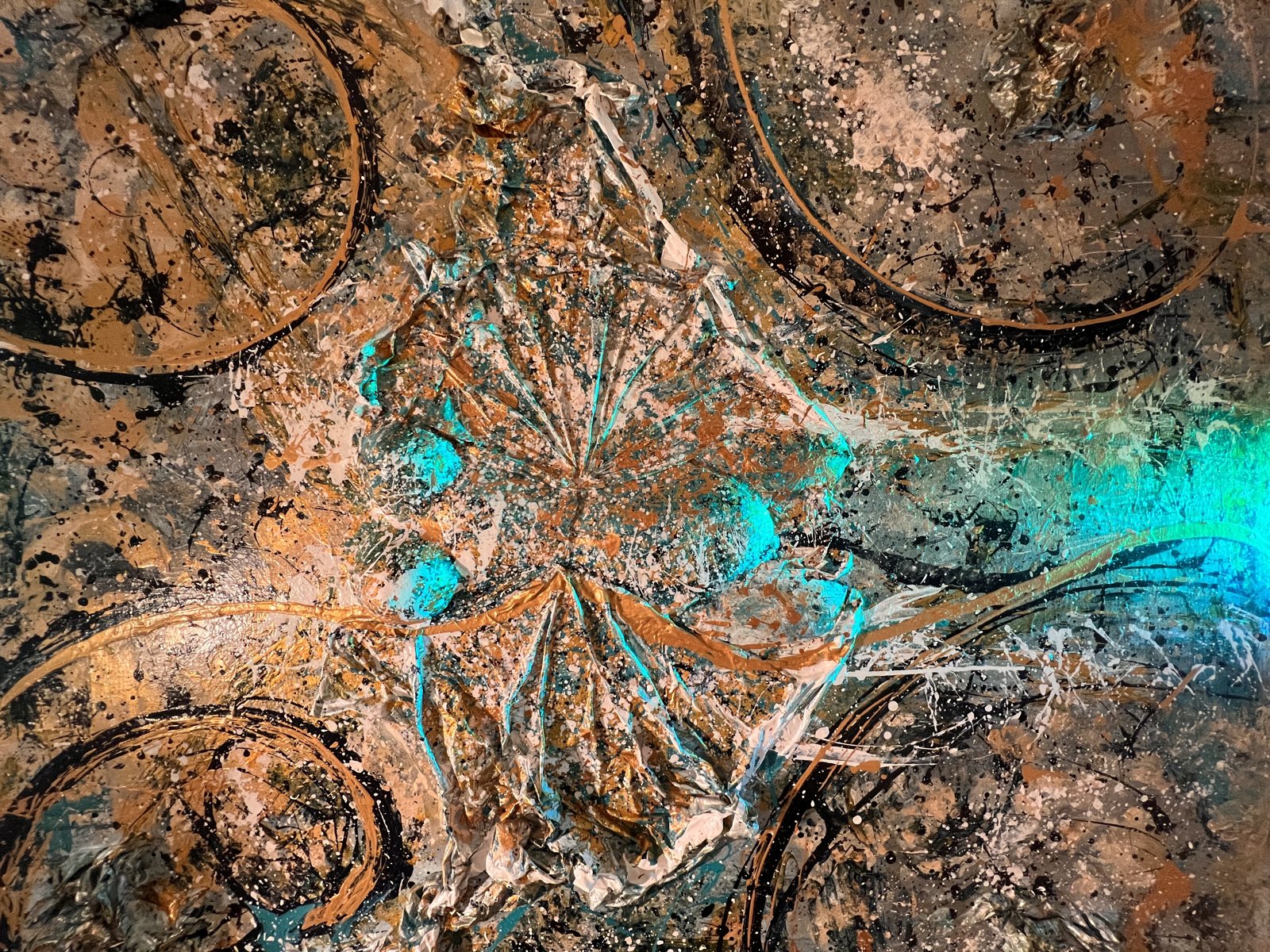
In her Burlap Series, hemp and jute, treasures of nature, become wall sculptures rather than painted canvases. Each piece is double-sided, the conscious and the subconscious in conversation. When light passes through the open pores of the weave, the whole work glows.
Her Kintsugi series borrows the Japanese art of mending with gold, so the break becomes the most beautiful part. Her Classics are textured, graceful abstracts.
Collectors
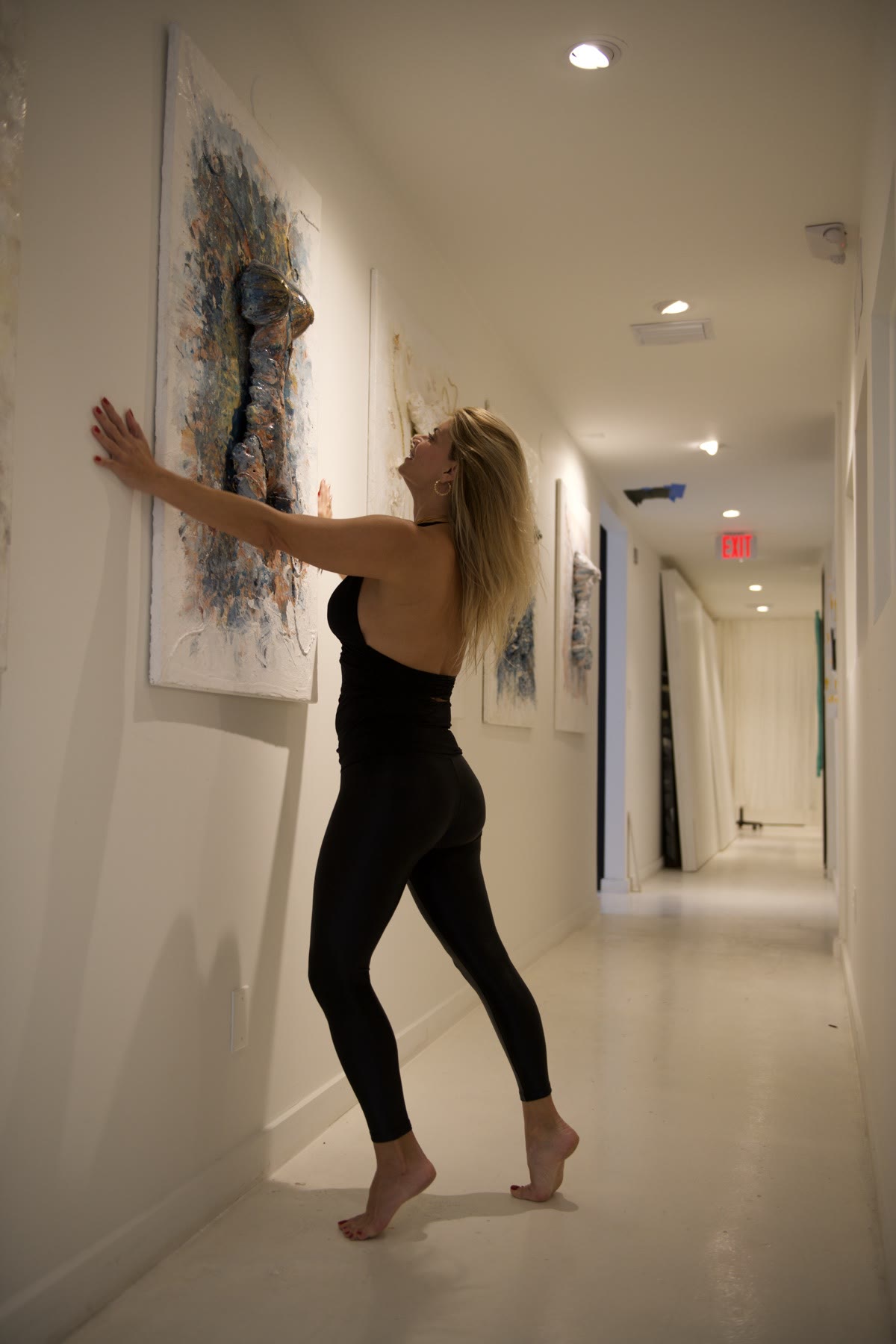
Collectors in Miami, West Palm Beach, Boca Raton, Chicago and New York have acquired seven to ten of her works at once. She works with developers, and her pieces hang in the lobbies and club rooms of high-end condos, including a 17-foot work for the hallways of Aston Martin Residences.
She has always been an out-of-the-box thinker. Read the story of her architectural graduation project, One Life, One Love, about bringing different religious beliefs together, and her own productive rebellion against authority.
My work begins with unlearning. I come to the studio through curiosity, following the hidden crevices of the subconscious that only surface and whisper in unexpected moments. I trained and practiced as an architect, and for years every material had a fixed job before I ever touched it. Making art is how I dismantle those boundaries and let the material tell me what it wants to become.
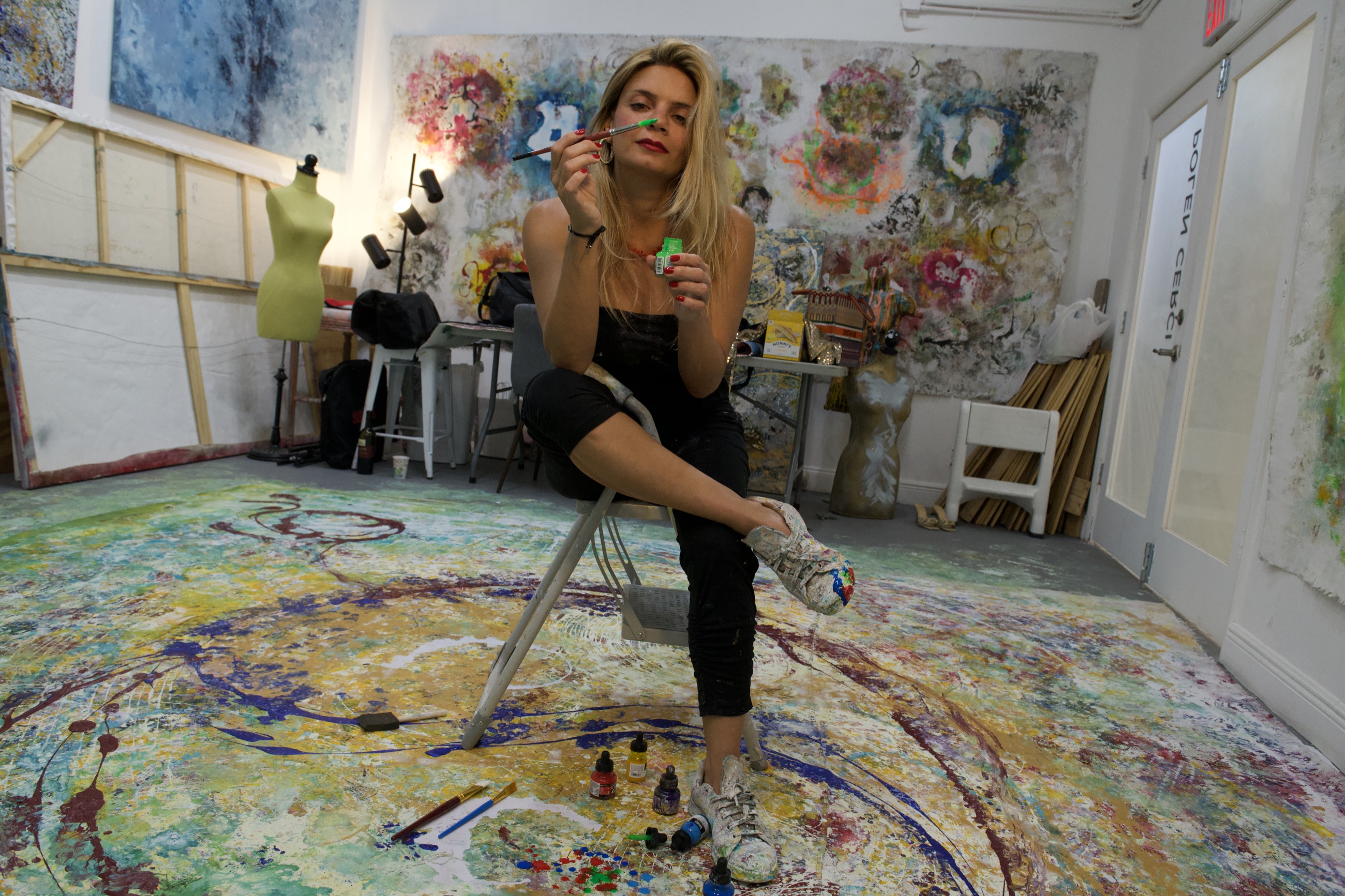
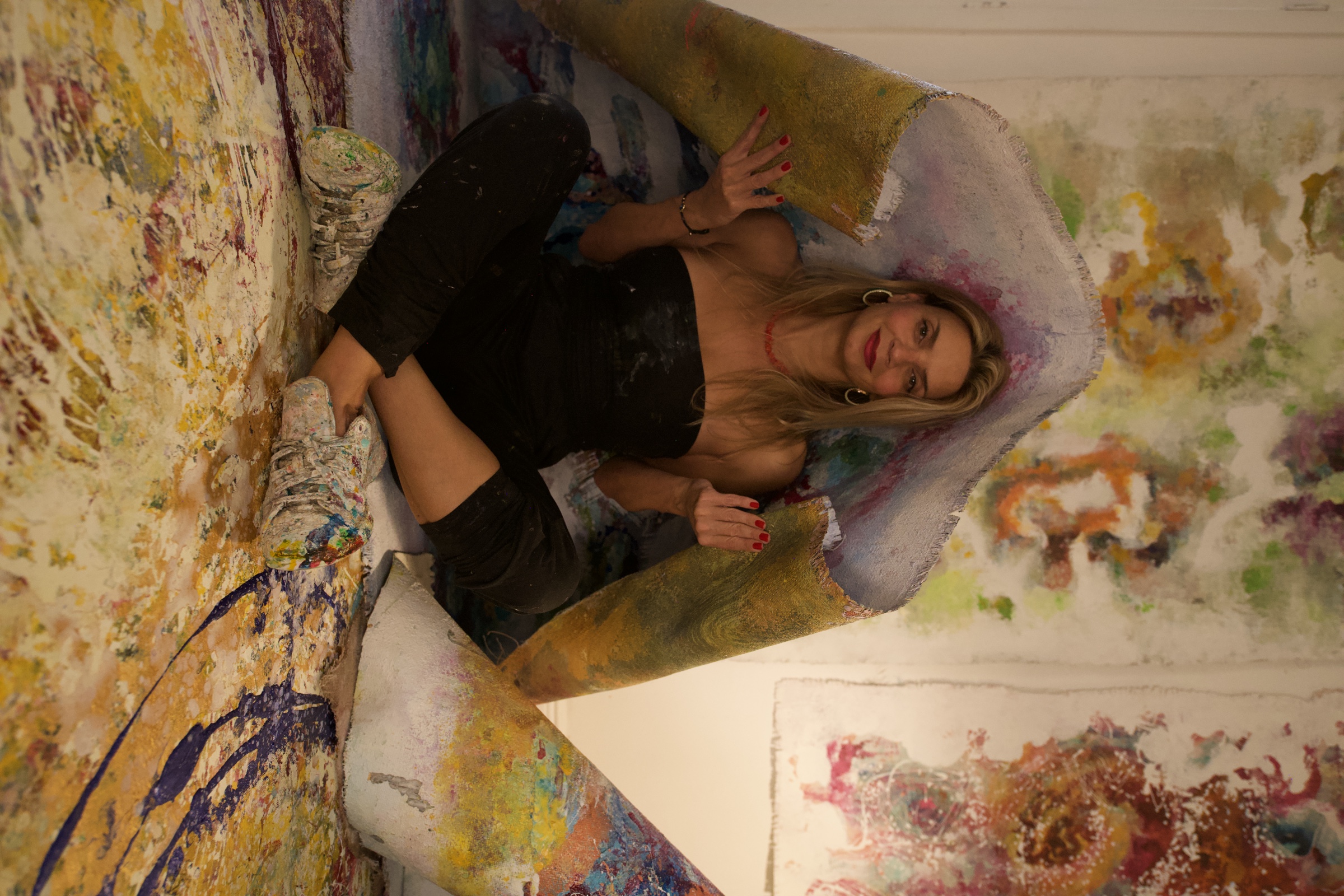
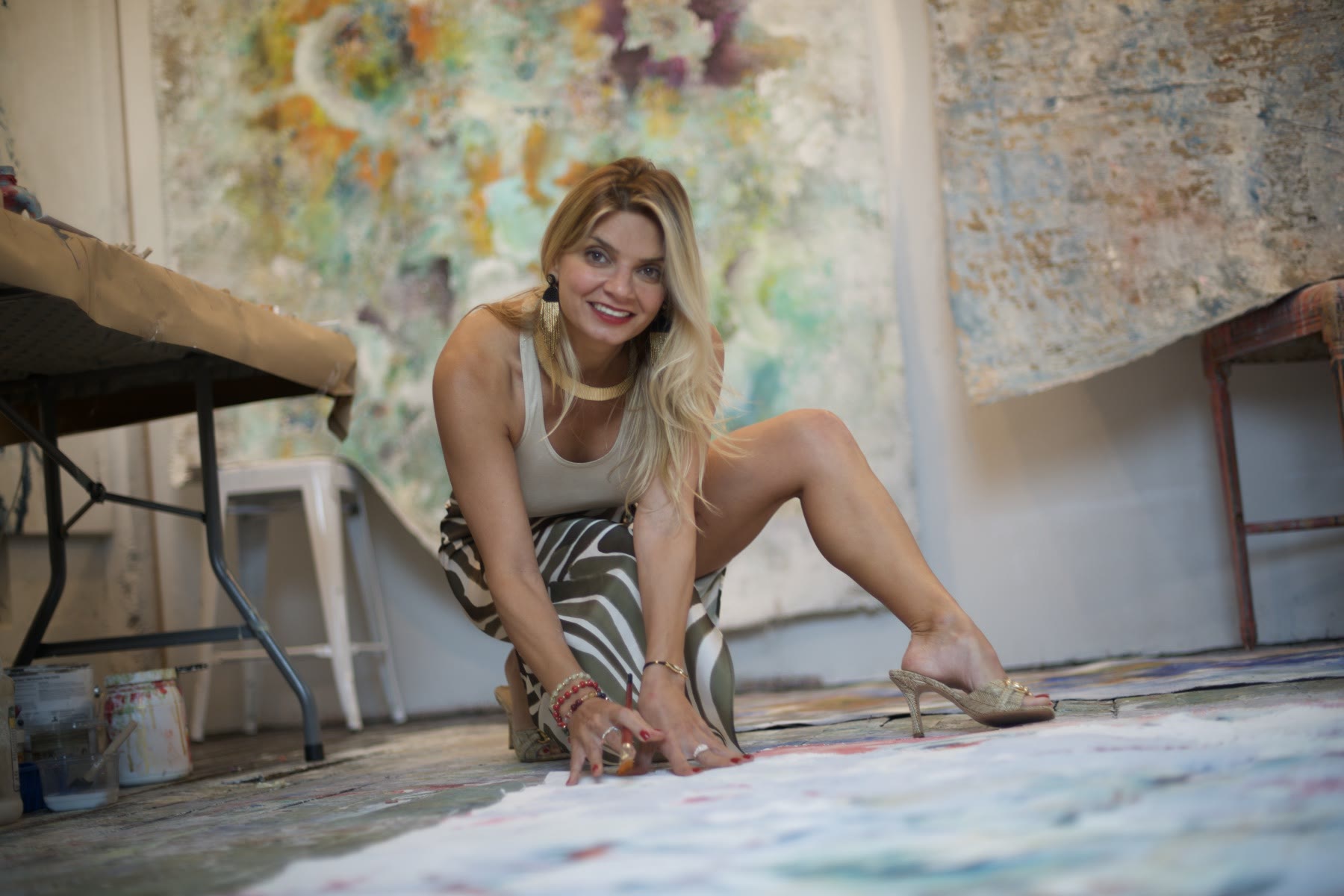
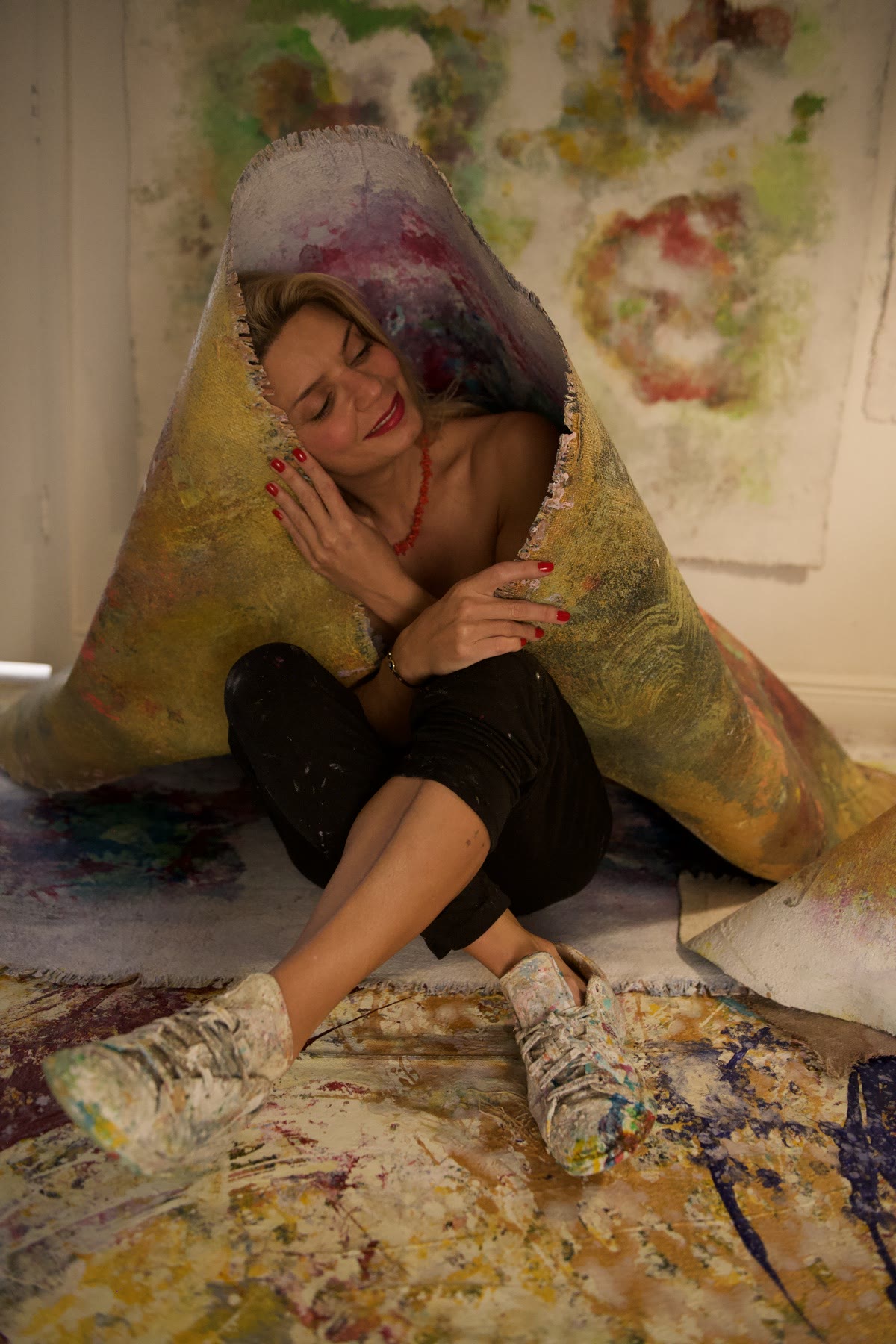
It started on the floor. I laid down a length of burlap and hemp and began saturating it, my whole body activated, painting with sneakers, with my hands, with my fingers, not only a brush and never in service of technique or message. The fiber is porous, so the paint passes all the way through and lives on both sides. Each piece is double sided and impossible to repeat, and because of this it can be hung from the ceiling and seen in the round, the two faces in constant conversation: one holding the real world, the other the dream world.
From this came two bodies of work that are, together, one transformation story. In one I hammer a woman’s torso from hard material to bring out the flaws in her and in all of us, so they can be embraced rather than hidden. I lean on the Japanese philosophies of wabi sabi and kintsugi to explain this work, not to be inspired by it. I believe there is more knowledge held in the body than in any book ever written, and I am still after it.
Art, for me, is the fine line between the other world and this one. It is a portal. I transform while I am making, the materials transform under my hands, and abstraction opens that same portal in the people who stand with the finished work. Texture, color, and an unidentifiable structure move through neurons that had not fired before, reaching for meaning. This is where I extend the work into architectural components and installations, fiber that wraps corners, hangs from ceilings, and becomes walls to move through, so the encounter happens in space and in the body at once.
What I want is not for anyone to arrive at my meaning, but the first spark toward their own new horizons, their way and not mine. That exchange is the real work: the pattern we make together in the collective consciousness, the shared ground we live in and speak through even in sleep.
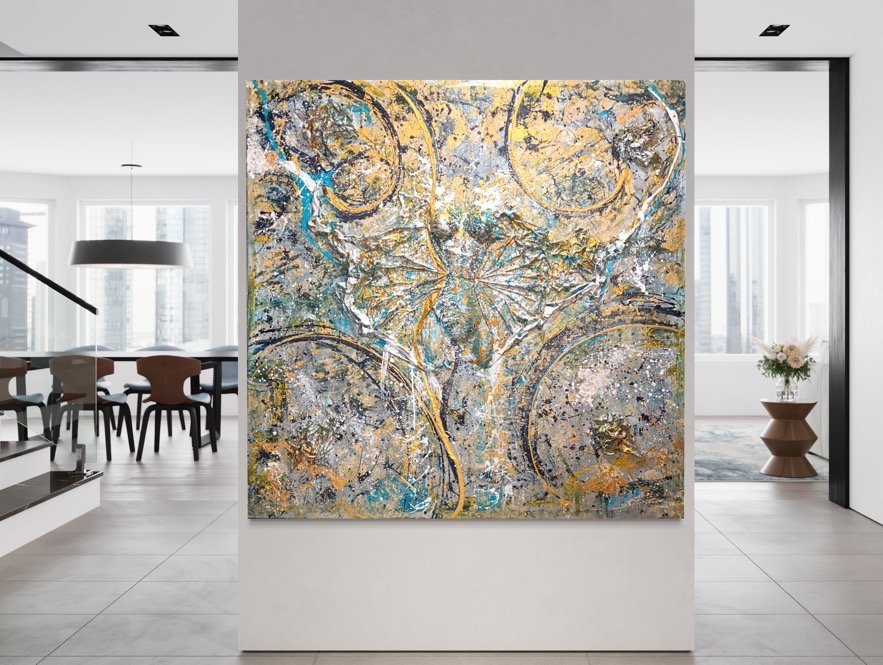
A collector moment
One of my early works, Scarlette Red, was chosen overnight for a Coconut Grove mansion, installed by 10 a.m. for a French television crew. In that moment a painting became the center of a room, and I understood what this work could do.
In the atelier
The floor is my biggest easel. I let gravity do part of the work, and the surface captures everything.